Virtual On Revisited: Saturn Twin Sticks and Virtuaroids
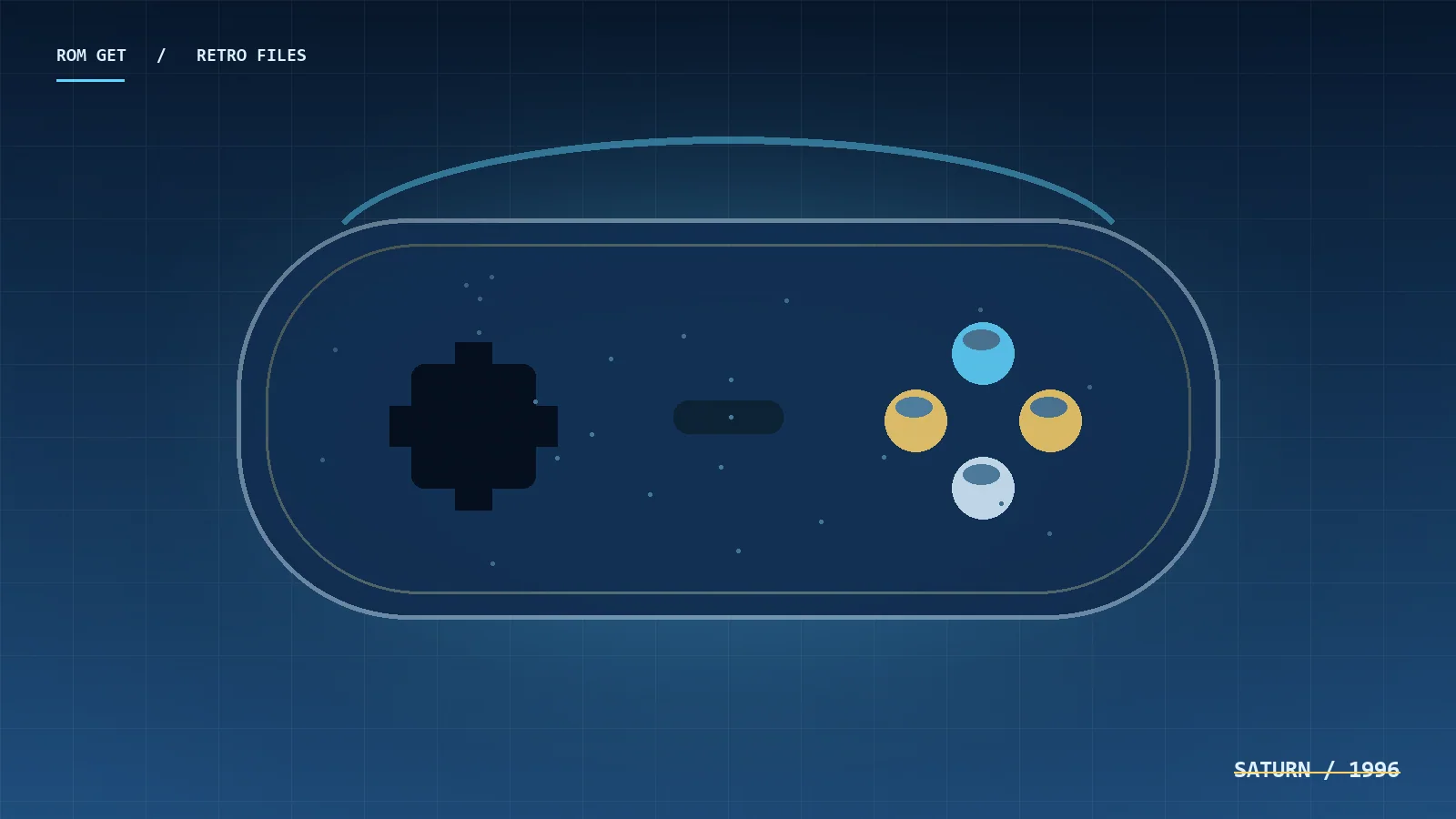
This Virtual On Saturn revisited review covers the 1996 twin stick port, its Virtuaroids, lock-on arenas, and the control quirks that aged badly.
Cyber Troopers Virtual-On began as a 1995 Sega AM3 arcade game and reached the Sega Saturn in 1996, and the home port lives or dies on one question: do you have the twin sticks. The arcade cabinet used two dedicated sticks, each with a trigger and a turbo button, and Sega sold a Saturn Twin Stick peripheral so the port could keep that layout. I played the 1996 disc with that controller, and the control scheme is still the most interesting thing about it. Strip it away and you are left with a fairly plain 3D arena shooter.
The twin sticks are the whole design
Most 3D games of the mid 1990s asked you to steer one character with one stick. Virtual-On gives you a stick for each hand and treats the pair as a single input device. Dash, jump, turning and weapon fire are all read as combinations of stick direction plus the trigger or turbo button, rather than as single face-button presses. That is a strange choice for a console port in 1996, and it is exactly why the arcade original felt unlike anything else in the building. The Saturn port kept the scheme instead of flattening it, which took some confidence.
The consequence is that your two hands do different jobs at the same time. One stick drives where the machine goes; the other decides where it is facing. Because those are independent, you can strafe sideways across an arena while keeping a target framed, or turn away while retreating. On a single-stick pad that separation collapses into awkward compromises. Learn to move and aim as two separate thoughts and the game opens up. Fight it, and every round feels clumsy.
How the input mapping actually works
Each stick carries a trigger under the index finger and a turbo button nearby. The triggers handle weapon fire, split by side, and the turbos handle the burst actions. Movement and turning live on the stick directions themselves, with the dash and jump coming from quick combinations. It is closer to operating a machine than to playing a platformer, and that is the appeal.
| Control | Physical part | Role in a round |
|---|---|---|
| Left stick | One of two dedicated sticks | Drives movement and the direction of a dash |
| Right stick | The second dedicated stick | Turns the Virtuaroid inside the arena |
| Trigger | One per stick | Fires that side weapon |
| Turbo button | One per stick | Triggers the quick burst actions, dash and jump |
Short timed rounds make this density work. You are never asked to hold a complex plan for long; you read the opponent, dash to reposition, fire, and reset. The loop is tight enough that the odd control layout becomes muscle memory within a session rather than a semester.
Temjin, Raiden and the Virtuaroid roster
The machines are called Virtuaroids, and the two names most players meet first are Temjin and Raiden. They are not skins over one hitbox. Each carries a different mix of ranged and close-range weapons, so choosing one changes the range you want to fight at. A loadout built around distant fire wants open space and careful turning; one built around close-range weapons wants you to close the gap and stay there. That decision is made before the round starts, and it shapes every dash you commit to.
I keep coming back to the contrast. Pick a ranged-leaning machine and you spend the round managing distance, backing across the arena while the lock-on box does its work. Pick a close-range one and the same arena becomes a problem of how to get inside the other weapon arc without eating a shot on the way in. Neither is strictly better, but a bad match between machine and personal instinct is obvious within two rounds.
Lock-on boxes and the 3D arenas
The fights take place in 3D arenas, and the game gives you a lock-on box to keep a target framed while both machines move. That box is the concession that makes twin-stick aiming playable. Without it you would be trying to hold a crosshair on a target that dashes and jumps while you yourself are turning with the other hand. With it, you can spend attention on positioning instead of on constant re-aiming.
The trade-off is that the arenas themselves are spare. They are plain 3D spaces with enough geometry to block a shot or force a detour, not detailed environments you want to explore. In 1995 that was the cost of rendering two fast-moving mecha at a steady frame rate. On a modern screen the flatness is the first thing that dates the game, and the lock-on box can feel like it is doing the aiming for you when a target slips behind cover.
What has aged badly
Honesty about the 1996 port means naming the parts that a fresh pair of eyes will not forgive.
- The standard Saturn pad. Without the Twin Stick peripheral the two-stick scheme is forced onto one stick and a cluster of buttons, and the separation of movement and turning that makes the game work is largely lost.
- Sparse arenas. The 3D spaces are functional but bare, and they repeat quickly across short rounds.
- Abrupt pacing. Short timed rounds keep the loop tight but leave little sense of a longer contest; a good exchange ends almost as soon as it starts.
- Lock-on dependence. When the box loses a target behind geometry, the fight briefly becomes guesswork rather than aiming.
Replaying the Saturn port today
Treat it as a lawful personal backup of a disc you already own, the same way you would copy media you bought. If you can find the Saturn Twin Stick, use it, because reviewing this game on a standard pad is reviewing a different and worse title. Spend the first ten minutes just dashing and turning without firing, until the two hands stop arguing. Then pick one Virtuaroid and stay with it for a whole session; the ranged versus close-range choice only means something once you have felt both ends of a round with the same machine.
Related reading
If you want to keep digging into this corner of the library, these two posts on Roms Get go a little further: