The Legend of Dragoon Revisited: PS1 Additions and Dragoon Meters
The Legend of Dragoon revisited looks at timed Additions, four discs and a Dragoon meter that turns every PS1 boss into a genuine resource decision.
The Legend of Dragoon arrived on the PlayStation in 1999, and its best idea is hiding inside the attack command. Dart and his party cross a continent toward a war, moving through four discs of CGI scenes and field maps. On paper it looks like another long Japanese role-player of the era. In play it is defined by a timing system that turns a plain sword swing into a small, repeatable test. That is the part I still respect, even when the dialogue tests my patience.
Four discs and a crossing of the continent
The story is straightforward. Dart travels with a group of companions across a divided land while armies move toward a larger conflict. The scale is sold through long stretches of travel, towns that change as the war shifts, and full-motion video that was a real draw on the original disc-based console. Four discs gave the developers room for cinematic scenes that cartridges of the same period could not hold without heavy compromise. You can feel that ambition in the way key moments are staged rather than described in a text box.
The cost is length. Scenes run long, conversations circle the same points, and the script leans on familiar stubborn rivals and stolen secrets. Some of that was normal for late PlayStation role-players, but Dragoon leans into it harder than most. I found myself skipping lines I had already read in a different form two hours earlier. The plot keeps moving, yet it rarely surprises, and the predictable turns make the war feel like a backdrop rather than a living thing.
Additions turn a menu into a timing test
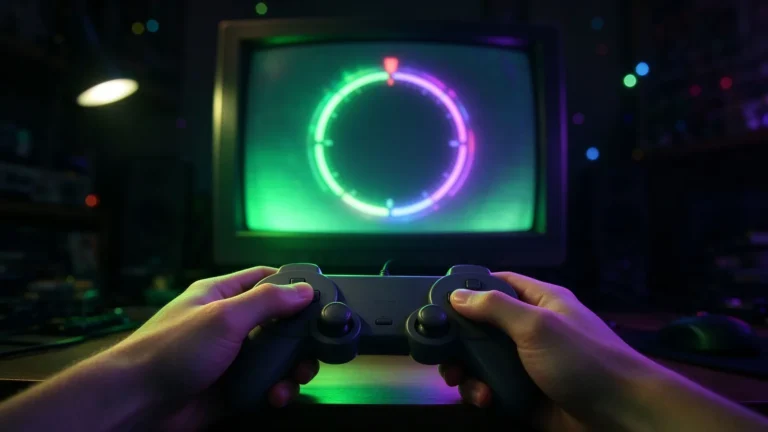
Combat starts like a standard turn-based menu. You choose attack, item, magic, or guard, then watch the party act. The twist comes when an attack connects. A short window appears and a second button press continues a chain called an Addition. Land the sequence and the character follows through with extra hits and more damage. Miss it and the attack still lands, but you lose the bonus. Nothing is taken away, so the system never punishes a bad run with a lost turn; it simply rewards attention with a better result.
That design changes the feel of ordinary fights. A random encounter that would be a formality in another role-player asks you to watch the screen and commit at the right beat. The window is short enough to keep you alert and long enough to feel fair after a few attempts. Different characters have their own Addition chains with different rhythms, which gives the party a texture that a list of stats cannot. By the time the chains lengthen, I was pressing on reflex rather than reading, and that is exactly the point.
SP and the Dragoon transformation
Landing an Addition does more than add damage. It fills SP, the meter that fuels the Dragoon transformation. Spend a full meter and a character changes form, gaining stronger attacks and a wider set of options for a limited span. The transformation is deliberately scarce. You cannot keep it running through a whole fight, and you cannot refill it instantly once it ends. That scarcity is what makes the resource interesting: every meter is a choice about when to spend it, not a button to press on cooldown.
I like how the system sits between a super move and a lasting power-up. It is too limited to carry a normal battle, but too valuable to waste on a weak enemy. The game teaches this without a lecture. Early fights let you experiment and lose a transformation to a low-value target. Later bosses punish that habit. Once you start holding SP for the right turn, the combat gains a layer of planning that the simple menu hides.
Spending the meter in boss fights
Bosses are where the timing and the meter meet. They have more health, hit harder, and often force you to defend or heal instead of pushing damage. A transformation used at the wrong moment gets burned on a defensive round and gives you little back. A transformation saved until the party can attack together can end a fight several turns early. The best results came for me when I watched the enemy pattern first, learned which rounds were safe, and spent SP on those turns rather than on the first available opening.
Where the pacing drags
The game is at its weakest between fights. Here is the rough balance I found across a full playthrough.
| Element | What works | What wears thin |
|---|---|---|
| Additions | Short timing windows make routine fights engaging | Longer chains repeat the same beats |
| Dragoon meter | Scarce resource shapes boss decisions | Slow to rebuild after a spent transformation |
| Cut scenes | Ambitious presentation for 1999 | Slow pacing and familiar plot turns |
| Field maps | Wide areas reward exploration | Backtracking across four discs |
None of those problems ruins the game. They do explain why my enthusiasm rises and falls in a predictable cycle: I enjoy a stretch of combat, sit through a long scene, then find my rhythm again in the next dungeon. Players who want a tight twenty-hour role-player will feel every minute of the padding. Players who accept the slow parts get a combat system with more personality than the menu suggests.
Its place among late PlayStation RPGs
Other big role-players on the same console offered larger worlds, denser scripts, or more systems to tune. Dragoon competes on feel rather than breadth. Its timing input gives each battle a physical rhythm that stat-driven menus lack, and the transformation meter gives that rhythm a longer arc. It does not have the depth of a game built around customizable parties, and it rarely asks you to rethink a strategy after the first boss. What it does is make every ordinary encounter slightly interactive, which is more than many of its peers managed.
The practical advice is simple. Play it with a controller you know well, because the Addition windows reward muscle memory over analysis. Save often during long field sections. And treat SP as a resource to be spent on a turn you control, not a meter that empties when it looks full. Do that and the four discs feel shorter than they are.
Related reading
If you want to keep digging into this corner of the library, these two posts on Roms Get go a little further: