How Region Lockout Chips Worked: 10NES, CIC and TMSS
A region lockout chip like the 10NES or SNES CIC checked a cartridge at reset with a key exchange, a handshake that still explains blinking consoles today.
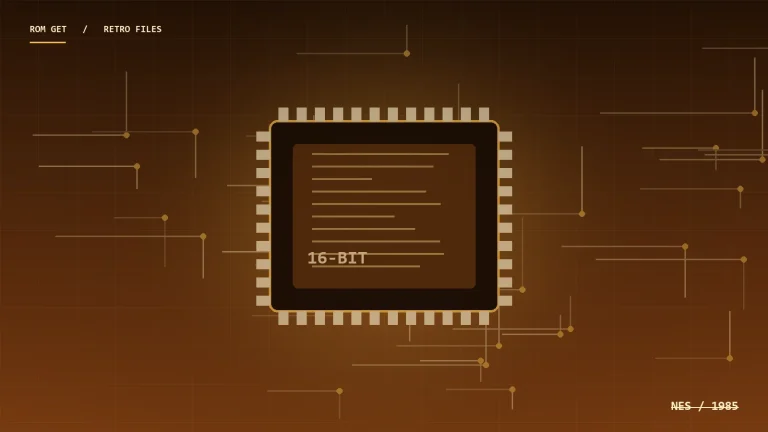
The North American Nintendo Entertainment System that shipped in the mid 1980s contained a small security microcontroller known as the 10NES. Every licensed cartridge carried a matching chip, and the console checked for it before a game would start. Nintendo later reused the idea as the CIC in the Super Nintendo, and Sega answered on the Genesis with a boot-time routine called TMSS, the Trademark Security System. All three were authorization checks rather than copy protection in the modern sense: they decided whether a cartridge was allowed to boot, and they are the reason a loose import cart from another region can refuse to run on a stock console.
The 10NES handshake on reset
On power-up the NES held the console in reset while the 10NES in the machine exchanged a stream of pseudo-random keys with the counterpart chip inside the cartridge. Both chips ran the same algorithm seeded with a shared value, so each could predict what the other should send next. If the cartridge answered correctly, the console released the reset line and the game booted. If the exchange failed or the cartridge held no chip, the console kept resetting in a loop, which players saw as the power light blinking and the screen flashing or staying dark. The check repeated continuously rather than once, so a mismatch later in a session could also drop the game. From a design standpoint it was a cheap gate: one small chip per cartridge, no cryptographic storage, and a behaviour that was easy to observe on real hardware.
The SNES CIC and the shaped shell
The Super Nintendo kept the same idea in a part usually called the CIC, again split between console and cartridge. Region mattered here because the console CIC was tied to a video standard and a territory, so a cartridge from a different region failed the handshake even though the hardware was otherwise similar. Nintendo paired that with a physical change: North American and Japanese shells used one cartridge shape, while PAL region shells used another, with different tab positions and a different pinout arrangement. A PAL cartridge simply does not seat in an NTSC slot without an adapter or a modified case. The shell did what the chip did, but mechanically. Together they kept software and hardware inside a region without needing any check inside the game code itself.
TMSS on the Genesis
Sega took a lighter approach. The Genesis TMSS was a boot routine stored in the console rather than a lockout chip in every cartridge. On startup the machine looked for a short license string in a defined area of the cartridge header, and if the string was present it showed a brief screen that displayed a trademark notice and a line of licensing text before the game began. If the check failed, the console could halt with an error message instead. Because the requirement was a string in a header rather than a physical chip, it was a software gate layered over the hardware. The boot screen became a familiar sight on early Genesis units, and its presence or absence is one clue collectors use to date a console revision. I remember it as a plain block of text on a dark background, gone in a couple of seconds.
How unlicensed publishers responded in general
A handful of publishers in the late 1980s and early 1990s shipped cartridges without going through the official license program. Describing their approaches at a high level is enough here: some designed a circuit that reproduced the expected key stream, others used clever timing or voltage behaviour to satisfy the check, and a few simply sold hardware that bypassed the console gate altogether. The details varied by region and by console revision, and they are of interest mainly as engineering history. I will not walk through any of those circuits or how to build one. The relevant point for a collector is that these cartridges exist, that their behaviour differs from licensed carts, and that a stock console may treat them inconsistently depending on the revision inside the case.
Why flash carts and emulators do not care
A modern flash cart does not need the original security chip, because it presents the expected behaviour in software or on a small programmable controller, and an emulator has no cartridge slot at all. An emulator loads a dump of the ROM into memory and starts executing at the reset vector, so the handshake between console and cartridge is simply absent from the model. Region checks that were enforced by a CIC or a shaped shell disappear unless the emulator deliberately emulates them, which most do not by default. That is also why a European PAL dump and a North American NTSC dump can both run in the same program with only a timing difference in frame rate. The security layer was a property of the physical object and its console, not of the game data.
Three checks compared
| System | Mechanism | Where it lived |
|---|---|---|
| NES | 10NES key exchange on reset | Console chip plus a chip in each cartridge |
| SNES | CIC handshake, region specific | Console and cartridge chips, plus shell shape |
| Sega Genesis | TMSS header string and boot screen | Console boot ROM and cartridge header |
A note for collectors
The practical consequence shows up when an import cartridge will not boot on an original console, or when a console blinks instead of starting. That behaviour is usually the lockout doing its job, not a dead machine. Before assuming hardware failure, confirm which region the cartridge and the console belong to, and remember that a Japanese cartridge in a North American NES or a PAL cart in an NTSC Super Nintendo can fail for two separate reasons at once. Keep the region of each cartridge noted beside it, and if you play imports, use a setup that you know handles the mismatch rather than guessing that a silent screen means a broken game. A quick check of the shell tabs often saves an afternoon of troubleshooting.
Related reading
If you want to keep digging into this corner of the library, these two posts on Roms Get go a little further: