Sega Rally Championship Revisited: Saturn Handling and Hidden Car
Sega Rally Championship revisited on the 1995 Saturn comes down to changing grip, drift timing and a hidden Lancia Stratos earned by winning Lakeside.
Sega Rally Championship revisited is mostly a lesson in grip. The 1995 Saturn conversion of Sega AM3’s Model 2 arcade racer keeps the core appeal: pick a car, learn a surface, and steer with enough early intent that the slide lands where you want it. Desert, forest and mountain stages do not just change the scenery. They change how much steering input the car accepts before the back end steps out, and how long you can hold a drift before it becomes a spin. That difference is the game.
Why the Saturn port feels different from the cabinet
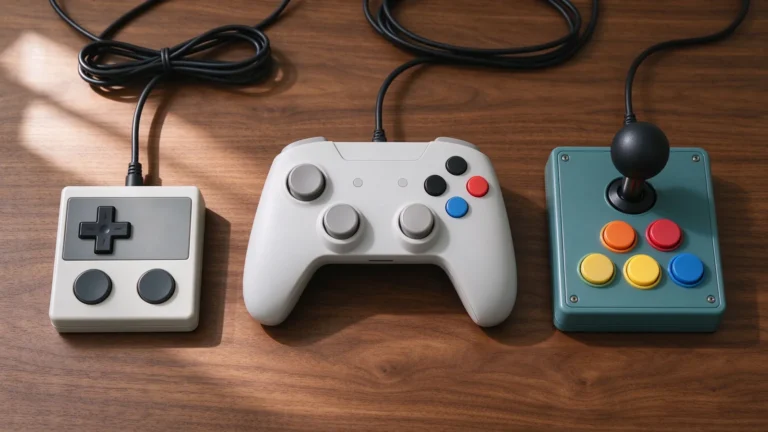
The arcade original appeared in the mid 1990s on Model 2 hardware, with a fixed view and a wheel bolted to the cabinet. The Saturn version translates that into a home setup with a pad and a television. The biggest change is not visual. It is the feedback loop. In the cabinet, the wheel resisted the slide and your hands knew what the car was doing. On a pad, you read the car through the image and the navigator’s calls, then correct with small taps.
That sounds worse, and in some ways it is. But the home port keeps the parts that mattered: short stages, quick restarts and a handling model that rewards commitment. You can brake early, turn in once and let the car rotate. What you lose is the physical argument with the wheel, and some of the cabinet’s immediacy.
Surface grip changes the driving line
Each stage type asks for a different input rhythm. Treat them as three separate cars wearing the same badge and the game starts making sense.
| Stage | Grip character | What the driver does |
|---|---|---|
| Desert | Loose, slides build slowly | Turn in early, feed the throttle |
| Forest | Tighter line, quicker breakaway | Short steering taps, brake before the bend |
| Mountain | Grip shifts through the section | Keep inputs small, time the drift late |
The table is not a set of laws. It is a way to think about why the same corner feels different on two stages. On desert stages you can hold a long, lazy slide because the surface lets the car keep moving sideways. In the forest the trees punish the same gesture; you need smaller corrections and a cleaner entry. Mountain sections ask you to wait for the grip to settle before you commit. Once I stopped driving every stage the same way, my lap times improved more than any setup tweak would have managed.
Cars and the hidden Lancia Stratos
The Toyota Celica GT-Four and Lancia Delta HF Integrale are the two readily available cars, and they are not interchangeable. One rewards a patient, planted line; the other is happier when you carry speed and let the chassis rotate. Choosing between them is a real decision because the stages reward different traits.
Then there is the hidden Lancia Stratos. Winning the hidden Lakeside course unlocks it, and that single condition changes how you approach the whole game. Lakeside is not just a bonus stage; it is a gate. Reaching it means you have already learned the surfaces well enough to stop crashing out of the last corner. The Stratos feels like a reward for consistency rather than for one fast lap, which suits a racer built around repetition.
What carried over from the arcade floor
Split-screen two-player is the most obvious carryover and the one I keep returning to. Two players on a Saturn pad navigate the same narrow stages, and the mode turns a solo time attack into an argument about lines. The navigator voice is less glamorous but just as important. It calls the upcoming bend while your eyes are still reading the surface, which replaces some of the information a cabinet wheel gave through your hands.
Time trial gives the handling model a clean laboratory. Without traffic, you can isolate one corner and test whether an earlier turn-in actually helps. Saved replays work with a memory cartridge, and watching your own run back is a blunt teacher. You see the moment you lifted too early or carried too much speed into a tightening section. On later replays I learned more from two minutes of a bad replay than from another ten laps of guessing.
Track repetition and where the port trims back
The same stages come around often, and that is the main complaint worth making. Three surface types can only vary so much before you recognize every bend. If you need novelty around every corner, this structure will wear thin quickly. If you treat each surface as a skill to refine, the repetition is the point: you get enough attempts to actually feel the difference between a good line and a lucky one.
The home conversion also trims parts of the cabinet experience. A wheel and a large cabinet screen gave the arcade game a physical presence that a pad and a CRT in a living room cannot fully replace. The short stage format survives, and so does the quick restart, but the sense of standing at a machine is gone. I would not pretend the Saturn version is a better version of the arcade game. It is a different way to reach the same handling idea, and it succeeds on those terms.
A fair verdict after years away
The handling still holds up because it asks you to plan a corner before you reach it rather than react at the limit. The hidden Stratos gives the game a second goal after the main races stop being interesting. The two-player mode and saved replays give you reasons to keep the disc in the drive. Against that, the limited stage variety is real, and the pad feedback never fully recovers what the wheel provided.
My advice for a return is simple. Pick one surface, run time trial until the drift timing feels boringly predictable, then move to the next. After that, chase Lakeside with the same patience. Winning it once is worth more than a dozen frustrated attempts at a fast time on stages you have not learned yet.
Related reading
If you want to keep digging into this corner of the library, these two posts on Roms Get go a little further: