Radiant Silvergun Revisited: What Its Scoring Teaches Shmup Design
Radiant Silvergun uses three levelled weapons and colour chains to teach bullet reading, and its no-continue structure still shows what shmup scoring does.
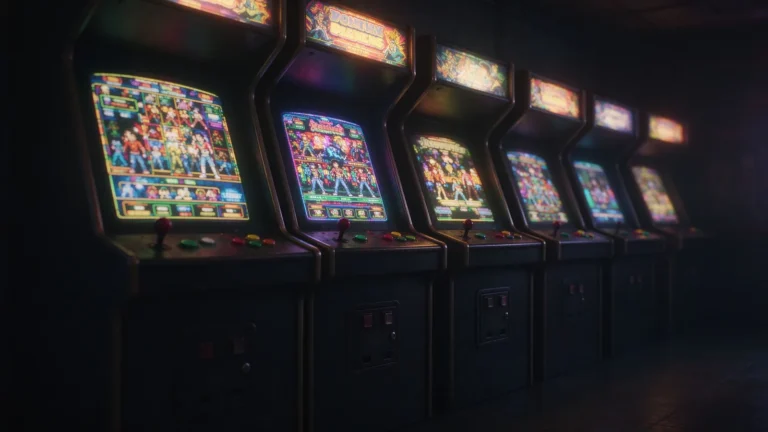
Treasure released Radiant Silvergun in 1998, first on Sega’s ST-V arcade board and then on the Saturn, and it is still the shmup I point people at when they want to understand how a scoring system teaches bullet reading. There is no panic bomb to clear the screen and no continue on the arcade board, so the entire run is one sustained performance. The game is short, hard and built around a score counter, and that combination is exactly why it remains a useful lesson rather than a museum piece.
Three weapons, three level chains
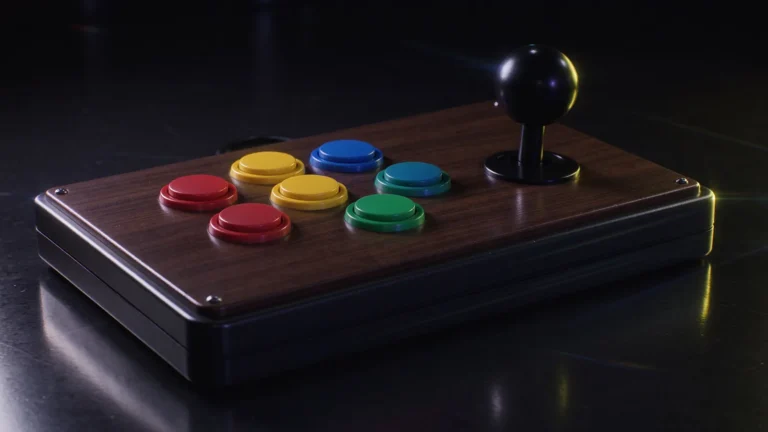
You fly with one ship and three attack buttons, and each button is a separate weapon with its own level that rises as you collect the matching power-ups enemies drop. Favour one weapon and it grows into a screen-clearing tool while the other two stay basic, so the loadout you build is a commitment you make over a whole stage.
| Weapon | Behaviour | Best use |
|---|---|---|
| Vulcan spread | fast forward shots in a widening fan | clearing dense waves straight ahead |
| Homing Plasma | projectiles that track nearby targets | stragglers and off-axis enemies |
| Radiant Sword | short-range blade that cuts and cancels bullets | close boss phases and tight crowds |
The Radiant Sword is the interesting one. It rewards flying close enough to an enemy to cut it, and it eats incoming shots at that range, so the most powerful weapon is also the one that asks you to sit inside the dangerous part of the screen. That single trade turns scoring into a positioning decision rather than a reflex test.
Chains, colour groups and the score
Enemies come in three colour groups, and destroying three of the same colour in sequence starts a chain. Each further same-colour kill multiplies the value of the chain, switching colour breaks it, and a clean chain carried across a whole stage is how the big scores are built. The stages are laid out so those colour groups arrive in readable waves, which means a high score is a memory exercise: you are rewarded for knowing what spawns next and destroying it in the right order.
This is the ancestor of what Ikaruga did in 2001 with black and white polarity. Radiant Silvergun is busier and less clean than its successor, but the principle is the same, and it is easier to see here because the colour groups are explicit rather than reduced to two states.
Boss phases and stage pacing
The six stages are short, and the bosses are long. Large enemies roll through several distinct forms, each with its own weapon pattern and weak point, and many of them change the shape of the arena by spawning rotating arms or drifting cover. A boss is not a damage race; it is a sequence of small pattern readings where your chain has to survive the transition from one phase to the next. Because there is no bomb, the only way out of a bad pattern is to already be somewhere else.
One credit, no continues
On the ST-V arcade board a credit buys one attempt from stage one to the end, with no continues and no extends. Death does not reset a checkpoint, it ends the run, so survival and scoring are the same problem: a greedy chain that gets you killed is worth nothing. The Saturn port loosens this with continue options and adds a boss rush mode, score attack and more story scenes, but the level design still assumes a single clean performance. That structure is why the scoring system has teeth.
Why it is a good teacher of bullet reading
Later manic shooters throw dense curtains of fast bullets and expect you to weave through gaps. Radiant Silvergun uses slower, clearly telegraphed patterns with generous spacing, and it removes the safety valve of a screen-clearing bomb. You cannot reset a mistake, so you learn to read a pattern before it reaches you, to hold a lane, and to plan a route through a wave instead of reacting to it. On a replay I found that stage one stopped being scary once I stopped watching my ship and started watching where the next colour group would appear.
What to practise first
- Learn stage one until you can hold one chain through its boss.
- Practise sitting at sword range without losing the ship.
- Memorise which colour group opens each wave.
- Play a full credit without continues before chasing a high score.
What has aged badly
The Saturn port mixes flat sprites with rough early 3D geometry that has not aged well, the story about a digging machine, a creator and a thing called the Mother is delivered in cryptic text dumps, and the game offers no tutorial for the level chains or the chain rules. Six stages is thin by modern standards, and the no-continue arcade structure is simply punishing if you only have twenty minutes. It is a game that asks for a guide or a patient friend.
Setting it up on a Saturn emulator
Use a Saturn core such as Mednafen’s Beetle Saturn, SSF or a RetroArch core from a legal backup of a disc you own, keep the original 4:3 output so bullet hitboxes read correctly, and reduce input latency until the ship responds on the frame you press. Turn off any turbo or autofire, since the chain timing depends on deliberate shots. Then leave the continues off for one run. When a single credit finally reaches the last boss, the score counter stops looking like a number and starts looking like a record of every decision you made.
Related reading
If you want to keep digging into this corner of the library, these two posts on Roms Get go a little further: