
Soul Reaver Revisited: PS1 Reality Shift and Raziel’s Plans
A Soul Reaver revisited look at the PS1 plane shift, pillar and water puzzles, Raziel’s voice acting and the load pauses between two planes in the 1999 game.

A Soul Reaver revisited look at the PS1 plane shift, pillar and water puzzles, Raziel’s voice acting and the load pauses between two planes in the 1999 game.
PaRappa the Rapper revisited: NanaOn-Sha’s 1996 PlayStation rhythm game grades timing and variation, not exact copying, across eight short stages.

A Final Fantasy IV revisited look at SNES Active Time Battle, Cecil the dark knight turned paladin, and why the spare 2D art still carries the story.
Retro subscription catalog guide: check the official listing, region availability, save options and offline behavior before you decide a service is worth it.
Billboard sprites explained: how camera-facing 2D images saved polygons on early 3D consoles, why they stayed sharp, and how to spot them while playing.

Parallax scrolling 16-bit explained: layered backgrounds moving at different speeds gave SNES and Genesis games a convincing sense of depth on television.
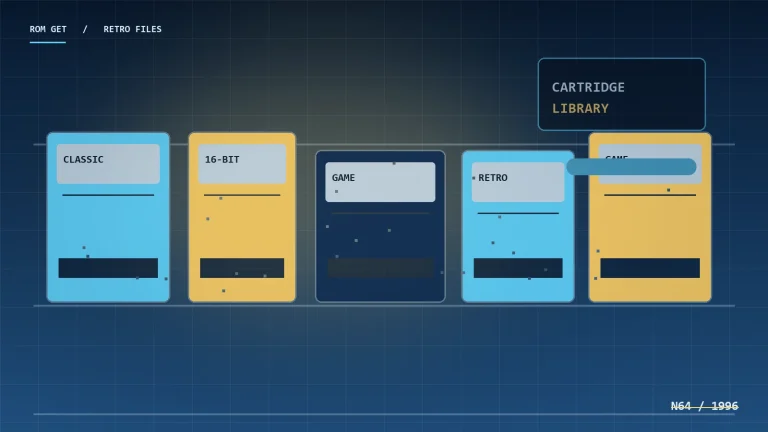
This look at N64 cartridge level design explains how fast random access produced compact linked areas, reused textures and short load pauses in Mario 64.

A Dino Crisis revisited look at how fixed cameras, scarce ammo and a draining oxygen gauge keep this 1999 PlayStation survival horror tense to this day.

Best N64 platformers ranked: a practical list of 3D jumping games, from Super Mario 64 to Donkey Kong 64, with honest strengths and clear weaknesses.
Gouraud shading explained: how vertex lighting and colour interpolation gave early 3D consoles their distinct and rather soft look across the PS1 and Saturn.
PS1 CD-ROM load times explained: see how elevators, corridors and audio streaming quietly shaped level design on the PlayStation and Sega Saturn.
Panzer Dragoon II Zwei revisited: the 1998 Saturn rail shooter adds branching routes and Berserk attacks, though its campaign is over too quickly.