Best Wii Party and Local Multiplayer Games for Group Nights
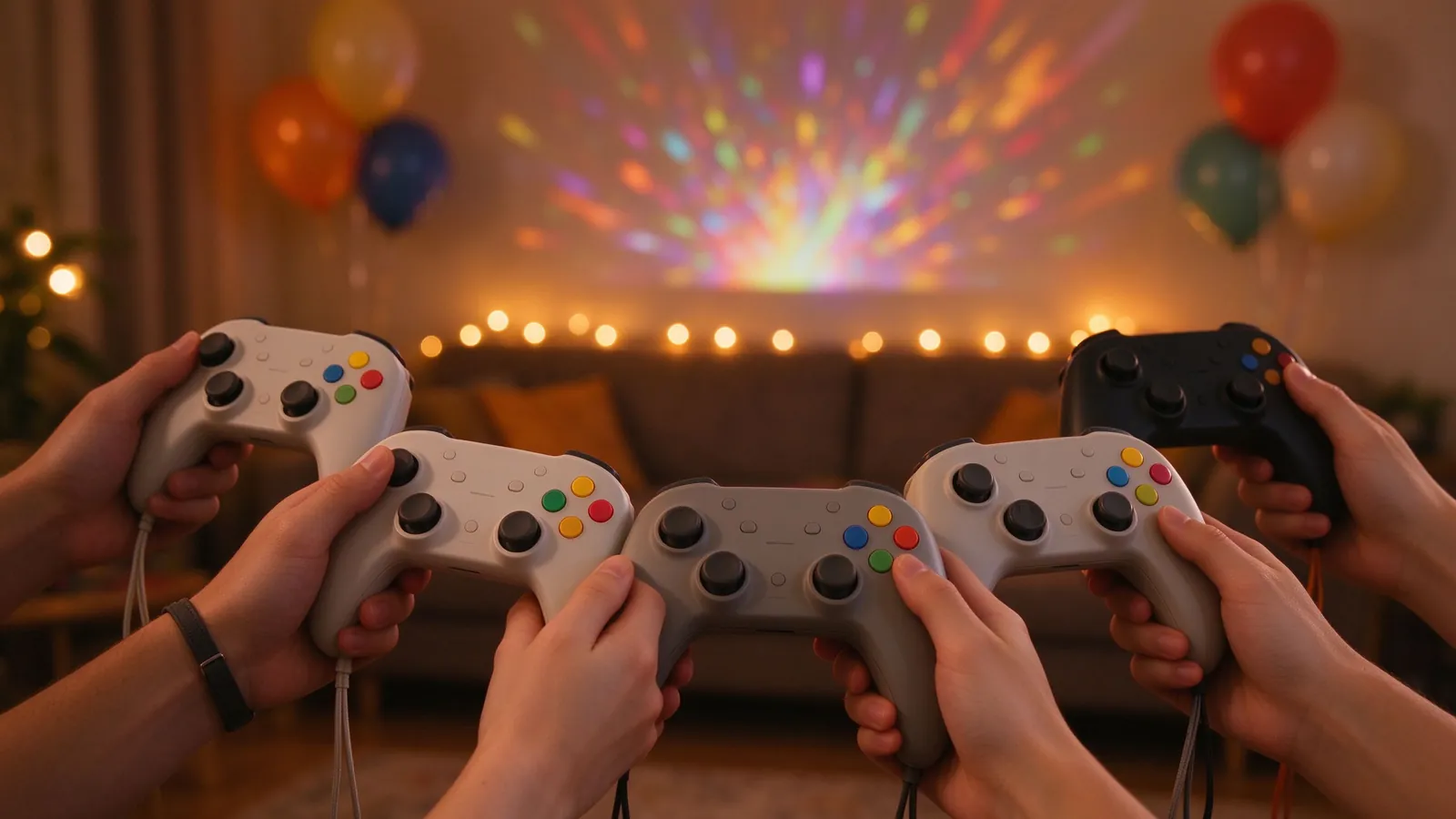
Wii party and local multiplayer games turned living rooms into motion-based group nights, with minigame boards, kart races, brawlers, and four-player platform runs built for guests.
The Wii made local multiplayer approachable: motion controls lowered the barrier for people who never touched a gamepad, and most party titles supported up to four players on one television. Even without original hardware, emulators can run the library with mapped buttons or motion substitutes, and the short-round design still works for group evenings. The list below covers motion sports, minigame collections, versus competition, and cooperative platforming, followed by practical setup notes. Use legal copies of discs you own, homebrew, or public domain material, and skip commercial downloads you did not acquire yourself.
Motion sports everyone can pick up
- Wii Sports (2006). Bowling, tennis, baseball, golf, and boxing wrapped in simple swing controls. Bowling alone fills a casual hour, and the short rounds let waiting players chat between turns. It remains the fastest onboarding game for non-gamers.
- Wii Sports Resort (2009). Expanded resort lineup with swordplay, frisbee, table tennis, archery, and canoeing. Motion accuracy feels more refined than the original, and the varied events suit rotating players rather than one fixed competition.
- Wii Play (2006). Nine tiny training-style minigames, from billiards to cow racing and tank combat. Each event lasts minutes, making it a warm-up playlist between heavier titles, and two-player scores create friendly rivalries quickly.
- Just Dance 2 (2010). Rhythm movement with on-screen choreography scored on timing and style. No prior skill required, and passing phones or controllers between dancers keeps a mixed group moving through a long party playlist.
- Mario & Sonic at the Olympic Games (2007). Track, swimming, archery, and dream events with simple motion or button routes. Events are short, teams can mix, and the cartoon tone keeps competition lighthearted.
Boards, minigames, and versus battles
- Wii Party (2010). A board-and-minigame collection with party modes, word challenges, and free-play minigames. Chance cards and team minigames keep outcomes open, and matches split into manageable chunks for mixed attention spans.
- Mario Party 8 (2007). Classic board movement interrupted by motion-based minigames. Dice rolls, item blocks, and rule-changing spaces create comebacks, while minigames alternate between four-player free-for-alls and two-versus-two rounds.
- Mario Kart Wii (2008). Kart racing with items, bikes, and split-screen races for up to four players. Courses are short, rubber-band items keep trailing players close, and it doubles as a tournament centerpiece before or after party boards.
- Super Smash Bros. Brawl (2008). Platform fighter with items, stages, and up to four combatants. Items and casual rules keep new players competitive, while stock matches give quick wins and immediate rematches.
- Rayman Raving Rabbids (2006). Absurd minigame collection with rhythm, shooting, and slapstick challenges. Humor carries the weaker events, and rounds move fast enough to sustain momentum through a full evening.
- Boom Blox (2008). Physics block puzzles with multiplayer scoring modes: knock towers, save characters, and race to targets. Thinking and timing combine, making it a quieter interlude between loud sports events.
Co-op platforming and setup notes
- New Super Mario Bros. Wii (2009). Four-player cooperative platforming where players can ride, carry, and accidentally throw each other. Friendly sabotage and shared lives make it a standout group title even when a session leans cooperative rather than competitive.
For a balanced night, start with Wii Sports or Wii Play to loosen everyone up, rotate through a kart race or brawler match, then settle onto a minigame board for longer rounds. Four pads make the party feel complete, but keyboard-plus-pad mixes work in an emulator if extra controllers are scarce; map motion-heavy games to buttons before guests arrive so calibration delays do not interrupt play. Save states are best left off for party events, since leaderboards and tiebreakers should follow the original rules. Our Wii and Dolphin emulator games list covers the broader library, including heavier single-player titles to slot between group sessions, while the two-player co-op classics list adds cooperative picks like brawlers and adventure titles that pair naturally with the platforming entry above. Keep the snack table clear of pads, take turns in the quieter minigames, and the Wii party lineup still delivers the kind of loud, replayable group play that defined the era.