Dino Crisis Revisited: PS1 Raptors and Oxygen Tanks
A Dino Crisis revisited look at how fixed cameras, scarce ammo and a draining oxygen gauge keep this 1999 PlayStation survival horror tense to this day.
Dino Crisis arrived on PlayStation in 1999 from Capcom with a premise that sounded simple on paper: a small rescue team drops onto Terror Island, expects a research station, and finds dinosaurs instead. What made the game stick was not the concept but the pressure. Regina, Gail and Rick have almost no firepower between them, the corridors are narrow, and a Velociraptor can cross a room faster than you can back away. Replaying it now, the choices that build dread are easy to separate from the ones that have aged badly.
Regina, Gail and Rick on Terror Island
The story gives you three specialists with clear roles. Regina is the computer expert, Gail handles the heavy fire, and Rick is the weapons specialist who tends to wander off. The mission is a rescue, yet almost immediately the team is split and you spend much of the game as Regina, moving through labs, vents and storage rooms alone. That isolation does more for tension than any scripted scare. You never know whether a doorway leads to a safe corridor or a raptor waiting just out of frame.
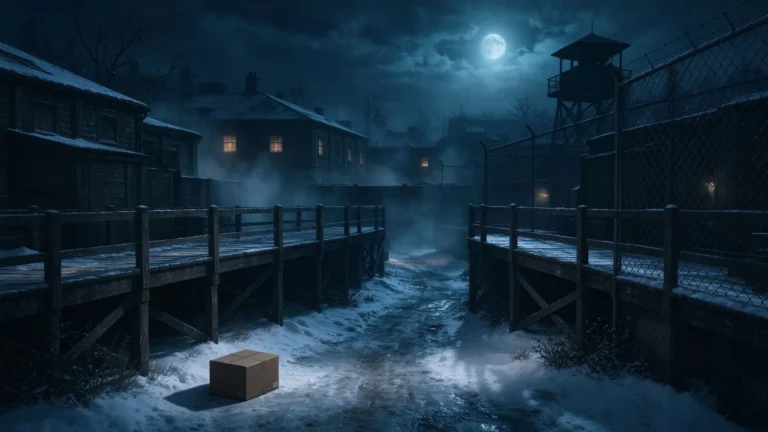
The setting helps. Terror Island is a facility that has clearly gone wrong, with emergency lighting, scattered equipment and doors that seal behind you. The environments are functional rather than decorative, which makes each room readable at a glance.
How the fixed cameras build dread
Dino Crisis uses fixed camera positions, the same approach Capcom used in the early Resident Evil games. Each area has a set viewpoint, and the view changes as you cross an invisible boundary. On paper that sounds limiting. In practice it lets the designer control exactly what you can see, and what you cannot. A corner hides an enemy until you step into the next frame. A slow push toward a doorway tells you something is about to happen before you understand what it is.
The trade-off is that combat feels awkward when a camera cuts mid-approach and you are suddenly facing the wrong way. I have lost more than one life to a cut that flipped the axis just as a raptor lunged. Still, the fixed framing is doing real work. It rewards memory over reflexes. Once you know a layout, you can plan a route and avoid a fight entirely.
Ammo, herbs and the oxygen gauge
Resource limits are the core of the design. Ammunition is scarce, healing items are limited, and the game expects you to walk past most enemies rather than fight them. That decision changes how you read every room. A raptor is an obstacle to clear only when you choose to pay for it. The tension comes from arithmetic as much as fear.
The airless sections add a second clock. When oxygen starts to drain, you have a short window to find the exit or the machine that refills the gauge. Retrieving the oxygen tank in the flooded areas is one of the game’s memorable sequences, largely because the resource is both a goal and a deadline. The laser-grid puzzles fit the same habit: they ask you to read a pattern, time a crossing, and accept that a mistake costs health you cannot easily replace.
| Resource | What it does | Why it matters |
|---|---|---|
| Handgun ammo | Damages regular enemies | Too scarce for every fight |
| Herbs and mixed kits | Restore health | Forces triage after a bad encounter |
| Oxygen supply | Fills the gauge in airless rooms | Turns exploration into a timed route |
What the tank controls still do well
The movement model is deliberately stiff. You press up to walk forward in the direction the character faces, and up plus a direction to turn while stepping back. Modern players often call this clumsy, and some of that criticism is fair. Yet the stiffness is a feature in a game about tight spaces. Because Regina cannot pivot instantly, you commit to a turn, and that commitment is exactly what makes a raptor ambush frightening.
The dodge and the sidestep give the system enough nuance. Tap the correct input at the right moment and Regina drops or rolls low, which can slip under an attack. Learning those inputs is more reliable than spraying bullets, and it is the main skill the game asks of you. Once it clicks, the controls feel precise in a way that free movement often does not in these corridors.
Where the script and voices show their age
The weakest part is the writing. Characters state the obvious, repeat themselves, and deliver exposition in lines that no real person would say. Gail’s one-liners land flat more often than not, and the voice acting swings between wooden and overwrought. The delivery was a product of its time, and it pulls you out of scenes that the camera work is trying to hold together.
That said, the plot still moves. The reveal about why the team was sent is planted early enough that a careful player can piece it together. I find the story works best when I treat it as a frame for the rooms and encounters, not as a drama in its own right. The dinosaurs themselves are more convincing than the people, which is a fair summary of where the budget and care went in 1999.
A practical way to replay it today
If you revisit the game through an emulator on a PC or a handheld, the biggest quality-of-life gain is a controller with a comfortable d-pad, because the tank controls depend on deliberate directional input. Keep the display aspect at the original setting and do not push resolution too high; the fixed cameras were composed for a CRT image, and a sharp upscale can make the framing look odd. Save often at the tape recorders and keep one clean backup of any disc image you own, separate from the copy you use for play.
The parts that still work are the parts you can feel in your hands: narrow corridors, a plan that depends on knowing the layout, and a resource budget that punishes waste. The parts that do not work are mostly on the surface. Look past the dialogue, learn the rooms, and the game still delivers a tight hour or two of careful, nervous play.
Related reading
If you want to keep digging into this corner of the library, these two posts on Roms Get go a little further: