Final Fantasy VI Revisited: Ensemble Storytelling at 16-bit Peak
A Final Fantasy VI review revisit on the SNES, examining how its ensemble cast, opera-stage drama and 16-bit presentation shaped JRPG storytelling.
Final Fantasy VI debuted in Japan for the Super Famicom in 1994 and reached North America later that year as Final Fantasy III, since earlier entries had not all been localized. Square built the game around a large cast rather than a single chosen hero, placing Terra Branford, Locke Cole, Celes Chere, Edgar, Sabin, Shadow, Cyan and others inside a crumbling world ruled by Gestahl and the antagonist Kefka. This revisit looks at how the ensemble structure works today, what the battle and esper systems still offer, and where 16-bit pacing and presentation show their age.
Ensemble storytelling before the lone hero trend
Most earlier role-playing games centered on one clearly defined protagonist, with companions filling supporting roles. Final Fantasy VI spreads screen time across roughly a dozen playable characters, each tied to a short personal arc: a thief chasing a lost love, a former imperial general choosing rebellion, a ninja working for coin, a samurai bound by honor, a gambler and a dancer with their own routines. The plot opens with an imperial assault on a mining town and expands into a story of magic, lost lore and a world that physically changes halfway through the campaign. That mid-game shift, which splits the party across a ruined landscape, lets the narrative breathe without forcing every scene onto one character.
Character writing leans on short scenes rather than long voiced cutscenes. An opera house sequence, a prison escape, a bar crawl and a rooftop reunion communicate personality through action, dialogue and sprite expression. The SNES RPG shortlist groups this game with other Square titles that treated party members as co-stars, and the classic SNES collection guide notes how rare this scale of scripted event felt on 16-bit hardware.
Battle system and esper flexibility
The active-time battle system keeps fights moving on a timer rather than waiting for every input. Characters act when their gauge fills, and the player can queue spells, items and attacks while enemies move, giving ordinary encounters a tactical rhythm rather than pure menu selection. Espers, the summoned creatures, do more than appear in short cutscenes: equipping one teaches spells to a character as that character gains levels, so the player shapes a custom spell list for each party member. That flexibility lets a melee fighter learn healing magic, while a magic user can pick up a useful physical command, and the team stays adaptable through the second half.
Combat includes normal random battles and scripted bosses, with commands such as Blitz, Tools, Steal, Slot and Lore tied to specific characters. Boss designs reward reading enemy patterns and using the right esper spell rather than spamming the strongest attack; the main story bosses do not demand hours of grinding on a reasonably built party.
Presentation, music and scene direction
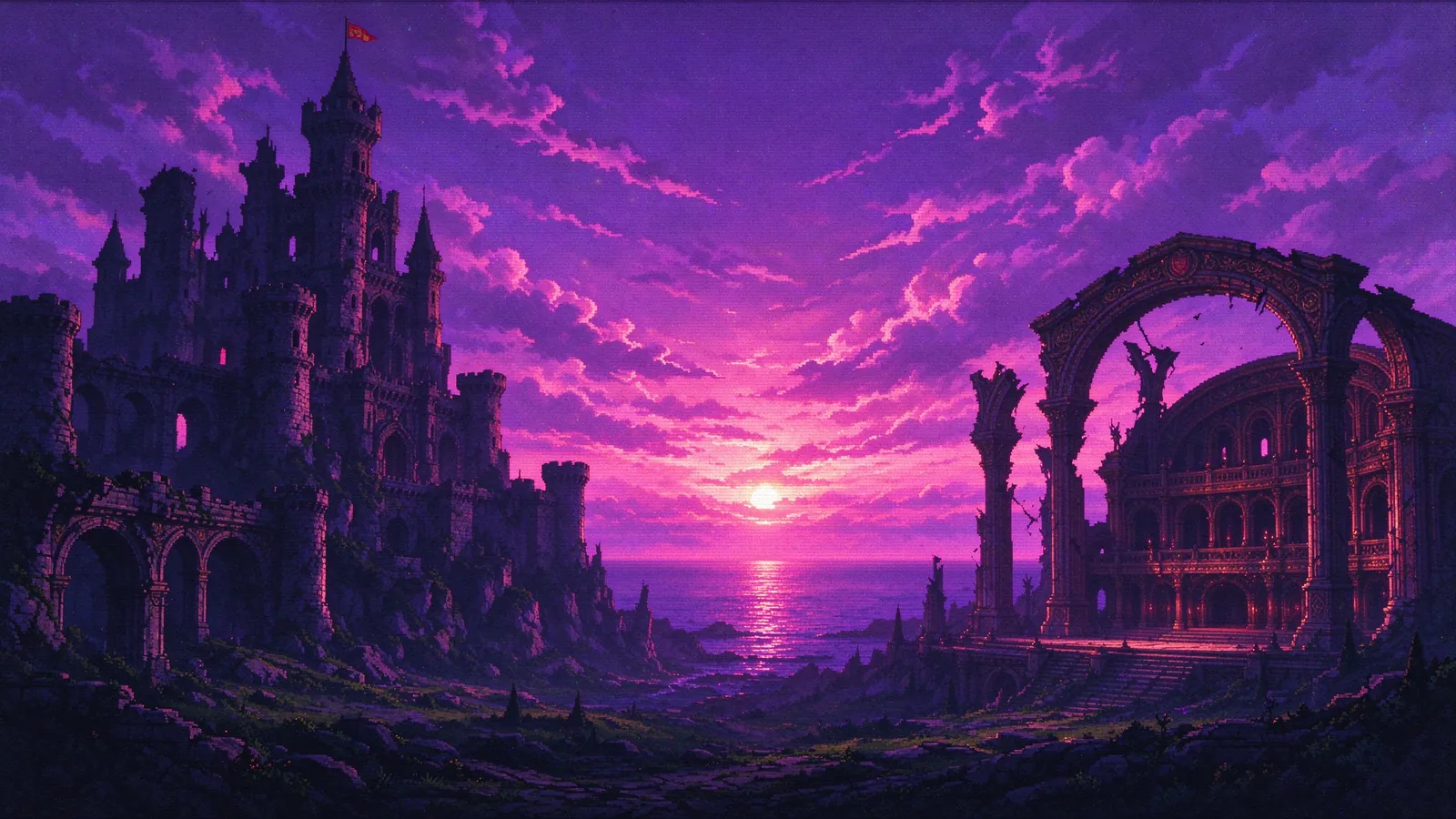
Nobuo Uematsu’s score remains one of the game’s strongest assets: overworld themes shift with the story, the opera scene uses structured melodies despite hardware limits, and boss tracks build tension with simple percussion and repeating motifs. Sprites are restrained but expressive, and the contrast between small characters and large summoned esper sprites still reads well on a modern screen. Set pieces such as a sleeping-passenger train, a floating continent and a collapsing tower use palette changes to signal tone, while emulators can smooth the display and reduce friction through save states.
What creaks after a fresh playthrough
The random encounter rate can feel high in long dungeons, and older players may miss the fast-forward options common in modern remasters. Menu navigation for equipping espers and spells across a large party takes time, and spell lists grow long enough that choosing a useful ability requires planning. The cast size means some characters receive fewer late-game scenes, and a few side quests rely on wandering the overworld to find hidden locations without much guidance. Graphics show their resolution limits when upscaled: basic text boxes, limited enemy poses and parallax detail rather than texture work. None of these points reduce the writing’s impact, but they ask the player to lean into story and system depth over audiovisual realism.
Verdict: still a peak of 16-bit JRPG design
Final Fantasy VI earns its reputation as an ensemble storytelling milestone. Its large party, flexible esper progression and memorable scenes still give players a reason to revisit the campaign, especially once the main world arc opens up. Expect dated menus, frequent random battles and sprite-era presentation, but paired with a modern save system the game remains a rewarding benchmark for how early console RPGs used character rotation to carry a long story.