
Contra NES Revisited: Spread Gun and the 30-Life Start
Contra NES revisited: the 1988 port keeps the arcade speed, five weapon letters and a thirty-life start that turns a punishing run into a fair practice loop.
Contra NES revisited: the 1988 port keeps the arcade speed, five weapon letters and a thirty-life start that turns a punishing run into a fair practice loop.
Best NES action-adventure games ranked for emulation, from Zelda and Metroid to Blaster Master, with years, saves and combat that still hold up today.
16-bit console case design compared the rounded dark grey SNES shell with sharper black Genesis hardware, built for a television stand rather than a desk.
Shining Force III revisited: how Synbios, Medion and Julian see the same civil war, and why its grid battles and promotions still read clearly on emulation.
Secret of Evermore revisited: alchemy mixing, a shape-shifting dog and hand-drawn American scenery still stand out in this 1995 Square Soft SNES role-player.

Castlevania II Simon’s Quest revisited: five body parts, village shops and a day-night cycle still make this 1988 NES hunt strange and rewarding.
Mega Man 3 revisited: an eight-boss opening, Rush Jet and a two-chain weakness puzzle that still rewards a careful stage order on the original NES cartridge.

How to compare retro game music releases without hype: check track lists, credits, catalog numbers and audio endings before you trust a playlist name.
Separate map screens retro games use a board to plan travel without ever leaving play, from Super Mario Bros. 3 style maps to compact handheld views.
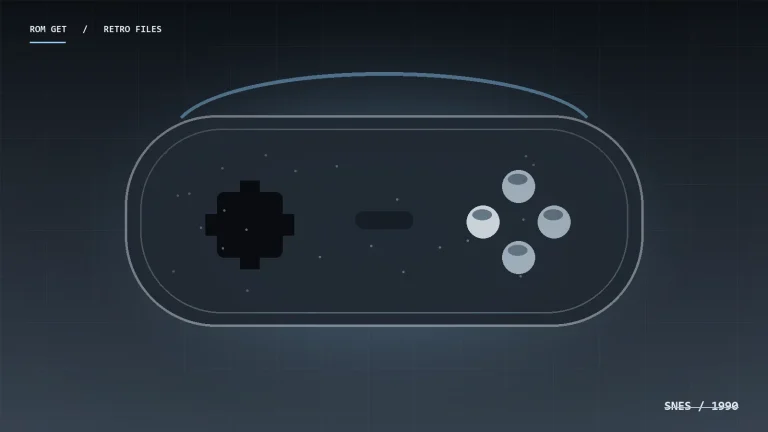
This four face buttons console history compares NES, Genesis and SNES pads, and explains why jump, attack, run and item settled into four buttons.
Sprite multiplexing explained: 8-bit consoles reused a few scanline sprite slots each frame, so more enemies could share the screen with visible flicker.
A practical guide to crop overscan NES SNES emulator settings: native resolution, small per-console crops, edge HUD checks and saving a core override.