10 Classic PS1 Games That Still Hold Up Today: A Retro PlayStation Review Roundup
The original PlayStation came out decades ago, yet many of its games still beat most modern releases at story, atmosphere, and gameplay loops. Here are ten that genuinely hold up.
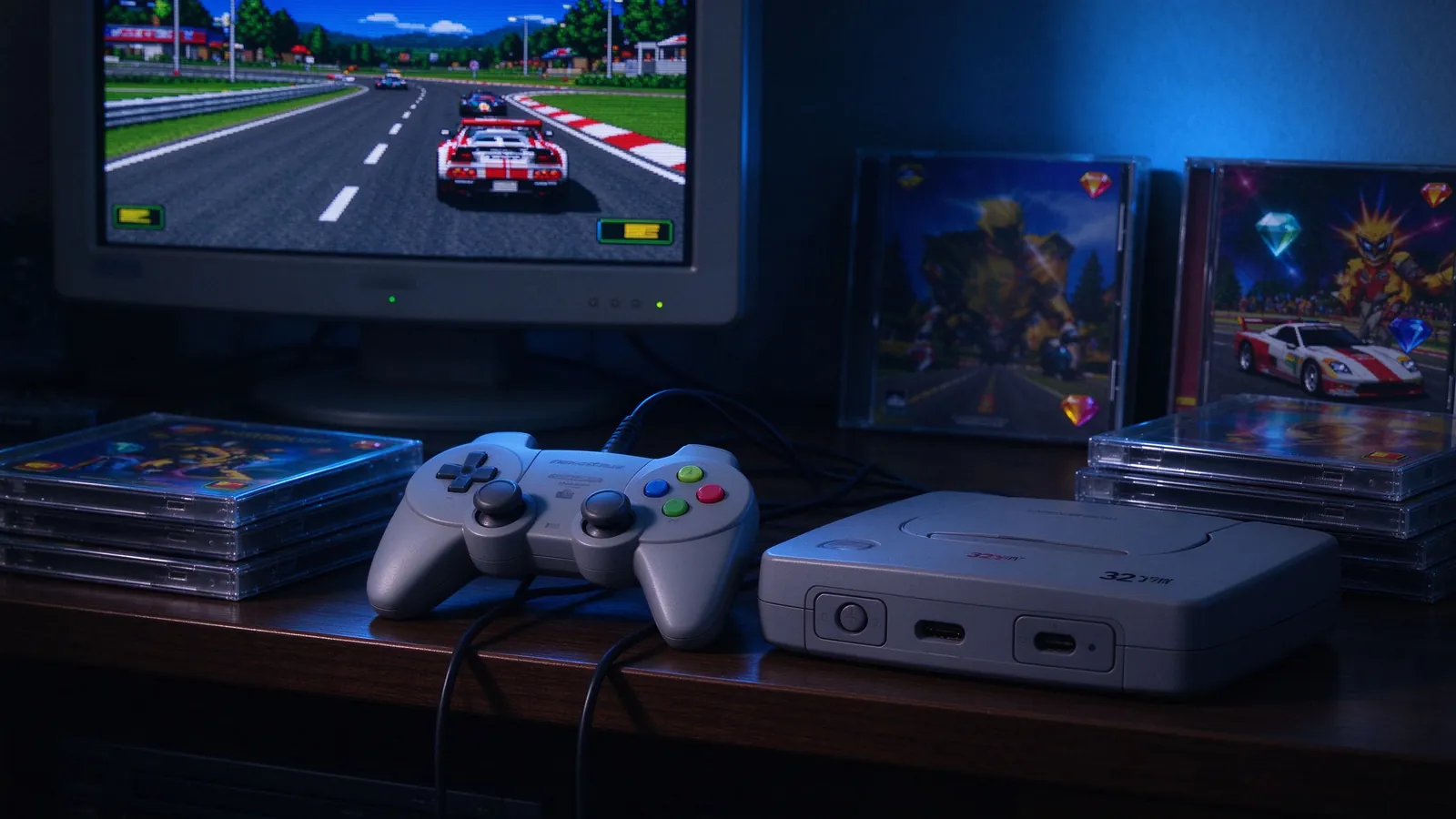
There is a reason PS1 ROM folders keep showing up in emulation communities everywhere. The gray box that launched in Japan in late 1994 mixed clunky early-3D visuals with game design that was willing to experiment: survival horror before it had a firm definition, cinematic storytelling before cutscenes became bloated, racing sims with real depth, and RPGs that treated villains like actual people. The polygons look rough by today’s standards, but the games underneath still matter.
This roundup mixes critical classics and personal replay favorites. We left out titles that only survive through nostalgia alone. Every entry below is something we would still recommend putting time into on a modern PC or phone through emulation.
10. Gran Turismo (1997)
Polyphony Digital basically invented the console driving sim. Hundreds of cars, a license-test career structure, and handling that rewarded patience rather than arcade speed-ups. Later entries are prettier, but the first Gran Turismo has a purity to its progression loop that keeps people coming back. It also introduced a whole generation to cars most would never have touched in real life.
9. Tekken 3 (1998)
Still one of the best-feeling 3D fighters ever made. Fast movement, stylish throw combos, and a cast where almost every character had a distinct rhythm. Tekken 3 aged better than most fighters because its systems were simple to read but deep to master. Pick Yoshimitsu or Eddy if you like chaos, or King if you want to spend months on grapple strings.
8. Castlevania: Symphony of the Night (1997)
More exploration game than linear action platformer. Alucard wanders a shifting castle, collects abilities, and maps out areas the player previously thought blocked. Symphony of the Night defined the “Metroidvania” conversation that still drives indie releases today. The atmospheric background music and the inverted castle reveal remain magical surprises decades on.
7. Tony Hawk’s Pro Skater 2 (2000)
Perfect arcade sports design: jump into a level, string tricks, chain manuals, chase the high score, repeat until your fingers hurt. The soundtrack alone owned many an adolescence, and the create-a-park mode gave players endless excuses to stay up late. No sports sequel has quite matched its balance between accessibility and depth.
6. Spyro the Dragon (1998)
A cozy collectathon on the purple dragon’s original outing. Camera issues exist, but the levels are bright, the flight feel is unusual for the era, and the goal is simple: free the dragons, gather the gems, enjoy the music. For players who want a calmer break from horror and shooters, Spyro still fits the bill.
5. Crash Bandicoot (1996)
The PlayStation’s early mascot answer to Mario. Crate-smashing, tight jumps, and tough camera perspective that frustrated plenty of players at the time and now. What keeps Crash relevant is its pure arcade rhythm and how satisfying a clean run through a challenging stage feels. The modern remasters polished it, but the original ROM version carries the 1990s charm.
4. Silent Hill (1999)
Where Resident Evil leaned on zombies and mansions, Silent Hill went for fog, radio static, and psychological unease. The real-time fog effect was partly a hardware trick to hide draw distance, but it ended up creating one of gaming’s most oppressive atmospheres. The school and hospital sections still unsettle people who played it as kids.
3. Resident Evil 2 (1998)
The survival horror blueprint. Limited ammo, locked rooms, a zombie in a hallway you cannot unsee, and two campaigns that intersect across a ruined Raccoon City. Tank controls feel awkward to newcomers, but once you adjust, every bullet matters. The 2019 remake introduced it to a new generation; the original ROM version remains the one the genre keeps comparing itself to.
2. Metal Gear Solid (1998)
Hideo Kojima turned stealth into a showpiece. Talk radio codec conversations, a genius boss like Psycho Mantis that “reads your memory card,” and a story about nuclear fear and corporate ego. The voice acting has a campy charm today, but the level design and the sense of being watched inside a complex still work.
1. Final Fantasy VII (1997)
The obvious choice, and it earns the spot. Materia customization, a world map full of secrets, the famous Midgar opening hours, and a cast whose emotional peaks land as hard now as they did then. Its translation is rough in places and the graphics are blocky, but the story structure, side content, and endgame challenges hold up. For many players this is the game that made a PlayStation worth owning.
Honorable mentions
Final Fantasy IX, Chrono Cross, Driver, Medal of Honor, Tomb Raider, and Parasite Eve all just missed the cut. JRPG fans should also keep an eye on Wild Arms and Suikoden, while vehicle players will find plenty to enjoy in the early Gran Turismo and Colin McRae titles.
How to play these on modern hardware
PS1 emulation on PC has matured nicely. DuckStation focuses on high-accuracy, smooth rendering with upscaling options that make old textures easier on modern monitors. ePSXe remains a veteran option with broad game compatibility. On Android, both emulators have builds worth trying. If your tastes then move into the PS2 era, PCSX2 covers that library well.
Whatever you pick first, approach these games the way they were designed to be played: in sessions, with patience for old interfaces, and an eye on the design decisions that modern games still borrow from. The polygons do not matter nearly as much as the ideas underneath them.