Physical Cartridge Preservation Basics: Labels, Contacts and Long-Term Storage
A beginner guide to physical cartridge preservation: label care, contact condition, battery-backed saves and long-term storage habits that keep a retro library bootable.
Physical cartridges outlive most digital accounts and download licenses, but they still need care. Plastic shells yellow, paper labels peel, edge contacts oxidize, save batteries drain and storage heat warps boards. Preservation at the collector level does not require a lab; it means inspecting what you buy, protecting labels, keeping contacts clean, managing batteries and choosing a stable place for the shelf. This basics guide covers the habits that separate a working collection from a pile of untested loose carts.
Reading a cartridge before buying or storing it
Start with the outside. The label should lie flat, with no large bubble, lifting corner, faded print or water ring. Price-tag residue should be removed gently rather than scraped off, because aggressive peeling takes printed ink with it. Check the shell for cracks, missing screws, melted plastic near the connector and age-related yellowing. The edge connector row should look uniform, with no bent pins, green corrosion, deep scratches or reworked solder joints. A clean exterior does not guarantee a working board, but obvious damage narrows the repair work before the cart reaches a console.
Test on known-good hardware when possible. Boot the game, start a save, power off for several minutes and reload. If the screen glitches, the console slot may be dirty, so clean both sides before judging the cart. Record findings in a simple inventory: title, system, year, condition, battery status and repairs. The note on retro game preservation and why dumps matter explains why board documentation supports collectors beyond resale, while cartridge cleaning and collecting tips covers the contact routine in detail.
Label care and surface handling
Labels are printed paper or vinyl stuck to plastic that flexes with temperature changes. Direct sunlight fades ink and heats the shell, humidity causes bubbling, and oils from bare hands collect around edges. Handle carts by the shell sides and ends, not by rubbing the artwork, and keep hands clean before opening sealed items. Avoid liquids on the label: water smears paper, alcohol can dissolve adhesives, and cleaners leave residue that attracts dust. For lifting corners, gentle flattening beats forcing the sticker back down, and original paper labels should never be laminated because covering them traps moisture. Many collectors keep worn original labels because period aging is part of authenticity; any new sleeves should use acid-free material.
Contacts, slots and electrical condition
The metal connector row carries data into the console. Light oxidation appears as a dull gray film; heavy dirt looks black or greenish, and it causes no-boot issues, mid-game freezes or failure to detect a save. Routine care uses gentle, straight strokes along the pins with solvent-safe tools, followed by full drying before insertion, and the slot itself should be cleaned because a dirty port contaminates every cart. Avoid rough abrasives that scratch plating, excess liquid that reaches the board, and any cleaner poured into the shell. Once cleaned, keep loose contacts away from metal hardware in bags and avoid shelves that scratch the edge row.
Save batteries deserve separate attention. Battery-backed titles lose progress when the coin cell dies, and leakage can damage traces. Note which carts use batteries, replace weak cells before long storage, and back up saves where the community supports dumps. A board that boots but cannot keep a save remains playable but should be listed honestly as needing battery service.
Long-term storage environment
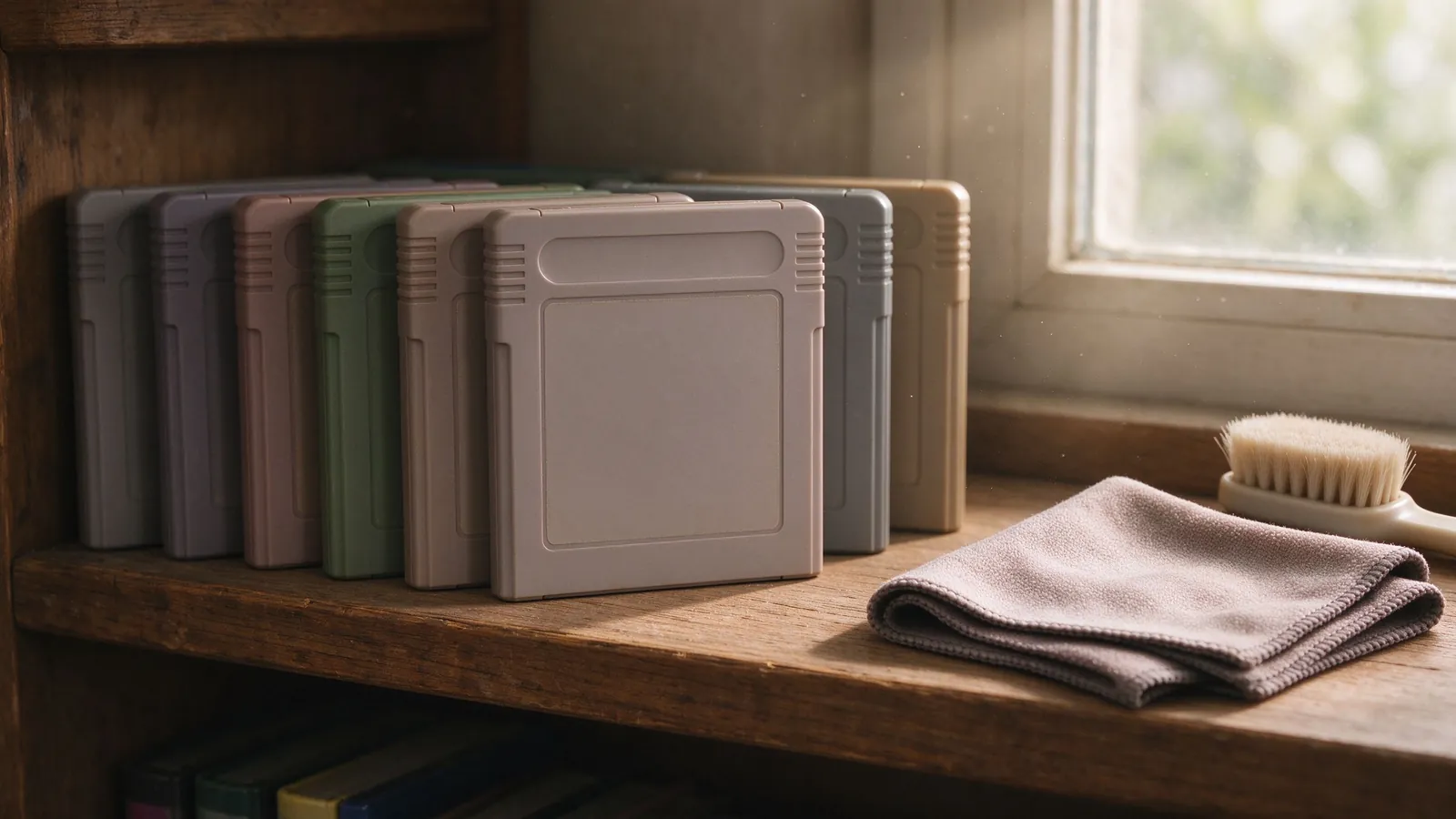
The environment matters more than most beginners expect. Aim for cool, dry, steady-temperature indoor space away from radiators, attic heat, basement moisture and windows. Heat warps plastic and weakens adhesives; humidity encourages corrosion and mold; strong light fades labels and yellows shells; dust abrades connectors during insertion. Stand cartridges upright in closed bins, shelves or lined drawers rather than piling them flat, and leave small gaps for air movement. Seasonal checks keep a small collection healthy: test representative carts monthly, inspect batteries yearly, tighten loose screws gently, remove sticky residue from purchases, and update condition notes. Avoid basement and garage shelves unless climate controlled, and avoid displaying favorite art under bright lamps. The goal is stable habits that keep labels readable, contacts conductive and saves available when the console boots.
Starting point for a new collection
Build the habit before the collection grows: inspect, test, record, clean lightly, store consistently. A modest group of well-cared-for carts outperforms a large shelf of untested buys with peeling labels and dead batteries. Treat repairs as documented choices, keep original parts where possible, and let the inventory file carry the repair history. With basic label and contact care plus a dry shelf, most cartridges can remain playable across decades of console cycles.