Best NES Platformers Ranked for New Retro Players
The best NES platformers still teach modern players how tight level design works, from Mario basics to the brutal boss gauntlets of the late library.
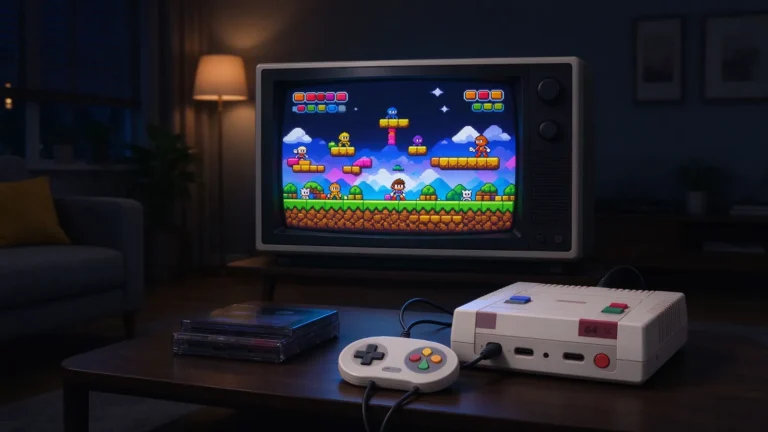
The Nintendo Entertainment System is where the console platformer was invented, and its library still rewards players who grew up with nothing but a d-pad and two buttons. Games here are short on tutorials and long on pattern learning: memorize a stage, master the jump, then shave the death count down. Modern emulators make this beginner friendly with save states, rewind features and generous controller remapping, so new retro fans can start on the Mario essentials before pushing into the harder 8-bit action picks below.
Mario-led essentials for new players
1. Super Mario Bros. (1985). The foundation of every side-scroller that followed. World 1-1 still teaches movement, jump timing and secret pipes in under three minutes, and the forty stage run across eight worlds stays tight enough to beat in a single sitting once the muscle memory clicks.
2. Super Mario Bros. 3 (1988 Japan, 1990 North America). Usually called the peak of 2D NES Mario: an overworld map with branching paths, power-ups including the raccoon leaf and frog suit, airship fortresses and bonus mini games. Each world has a distinct theme, and the secret Toad houses keep replays rewarding.
3. Super Mario Bros. 2 (1988, North America). A dream-world adaptation of Doki Doki Panic where you lift vegetables and enemies instead of jumping on them. Four playable characters with different speed and jump heights change how stages are solved, and its vertical exploration feels unlike any other Mario on the system.
4. Kirby’s Adventure (1993). One of the last first-party NES releases, with copy abilities that let Kirby steal enemy powers such as sword, beam or fire. The difficulty curve is gentle, which makes it a good warm-up before the harder games below, and the colorful sprites show what the 8-bit chip could do late in life.
Harder action platformers worth the grind
5. Mega Man 2 (1988). Eight robot masters selectable in any order, boss weaknesses discovered by experimentation, and tight jump physics that make death feel fair. The boss music, weapon screen and weapon swap rhythm still influence indie platformers today; it is the safest starting point of the Blue Blaster series on NES.
6. Mega Man 3 (1990). Adds Rush the robot dog, slide movement and harder stage variety, while introducing bosses that fans still bring up in retrospectives. The difficulty spikes near the end, so treat it as a follow-up once Mega Man 2 clicks.
7. Castlevania III: Dracula’s Curse (1990). Sypha, Grant and Alucard join Trevor across multiple branching routes, each character changing the play style from whip attacks to magic and wall climbing. Stage design and gothic music peak here among the classic NES Castlevania trilogy.
8. Ninja Gaiden (1988). Fast wall-to-wall action with the signature wall-jump climbing, cutscenes between levels and brutal late-game difficulty. The enemy respawn pattern will test patience, but the control feel and the stage names keep fans coming back decades later.
9. DuckTales (1989). Scrooge McDuck bounces on his cane through the Amazon, Transylvania, the Moon and the mines, with nonlinear level choice and hidden treasure routes. The soundtrack by Hiroshige Tonomura became a chiptune favorite, and the level flow stays short enough for quick emulator sessions.
10. Little Samson (1992). A late, expensive release with four playable characters, generous checkpoints and charming monster designs that never got its due in the West. Rare and expensive on cart, it is a perfect candidate for emulation, especially for players who already cleared the classics above.
Starting your NES platformer playlist
New players should open with Super Mario Bros. 3, move to Kirby’s Adventure for a relaxed breather, then commit to Mega Man 2 and Castlevania III when they want a real challenge. Save states remove the old password hassle, but try one clean run of each game before leaning on rewinds; the pattern memory is half the point. For setup details, read our beginner guide to playing classic NES games on PC, and once the 8-bit library feels familiar, our top SNES classics list shows where the genre went next.