Classic Handheld Puzzle and Strategy Games Worth a Comeback
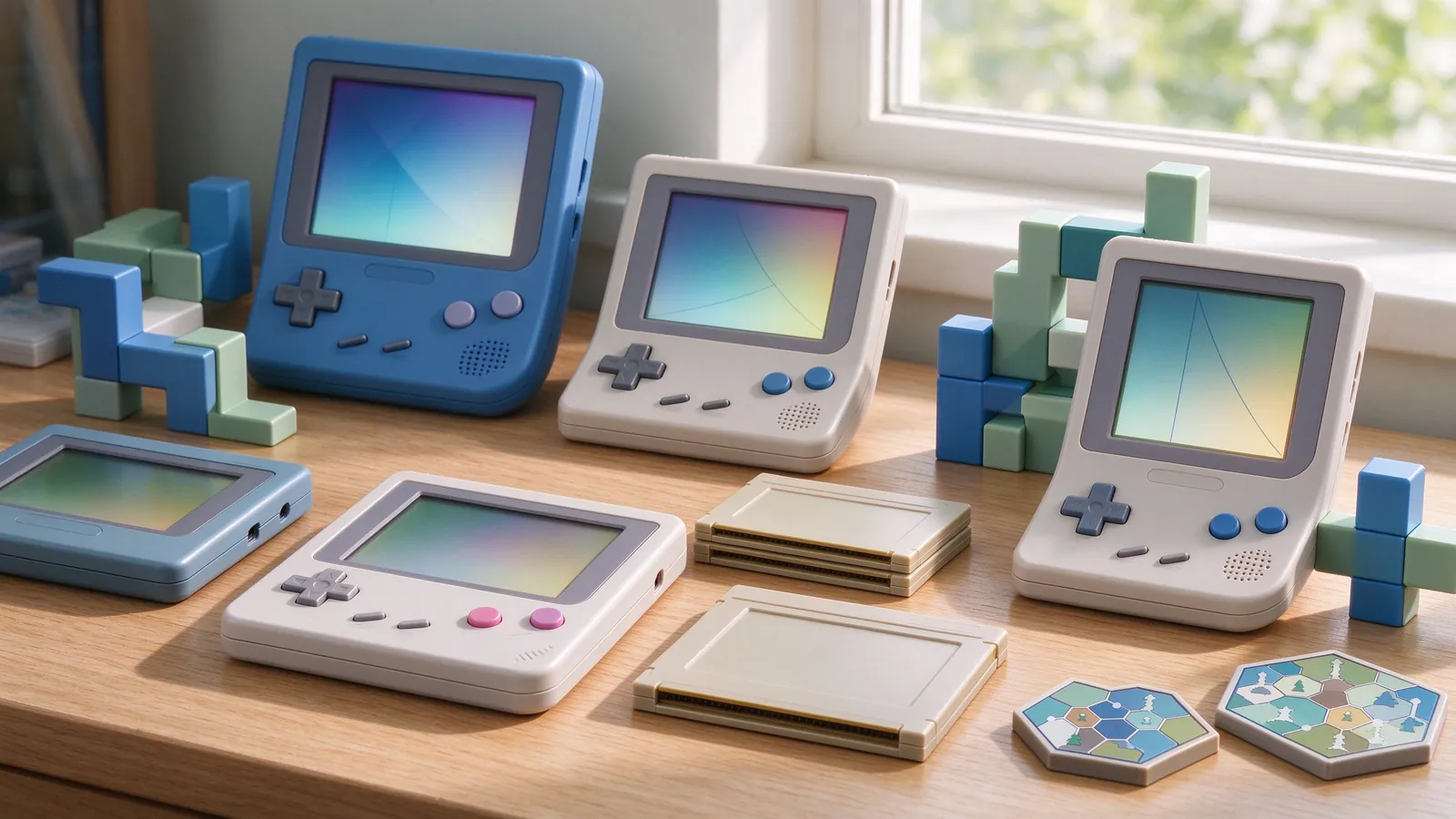
Classic handheld puzzle and strategy games built for pockets: tile matchers, microgame sprints, grid warfare, and turn-based campaigns that survive short play sessions and long replays.
Handheld consoles specialized in games you could drop in and out of, and puzzle or strategy titles fit that rhythm perfectly: a few minutes for a match, a scenario saved mid-campaign, a puzzle board restarted whenever the bus arrived. The Game Boy, Game Boy Color, Game Boy Advance, and PSP each left a durable catalog of tile puzzles, grid tactics, and light campaigns. Modern emulators preserve these titles with quick saves and convenient screen scaling, and the short-session design still feels natural today. This list mixes recognizable puzzle classics with deeper strategy campaigns, then notes how to keep portable play tidy. As usual, use dumps of cartridges you own, official re-releases, or homebrew and public domain titles rather than unauthorized commercial files.
Puzzle classics for quick sessions
- Tetris (Game Boy, 1989). The tile-stacking benchmark: clear lines, hold back the stack, and chase level speed. Its hold-free, gravity-driven simplicity made it the handheld default, and endless mode suits commutes, waiting rooms, and quick practice runs.
- Dr. Mario (Game Boy, 1990). Falling pill puzzle where colors match floating viruses. Rotation planning, combo chains, and speed levels give it a distinct rhythm from Tetris, and versus stages add competition when a friend borrows the second device or emulator window.
- Yoshi’s Cookie (Game Boy, 1993). Row-and-column cookie matching with timed puzzle boards and competitive modes. Grids stay small, patterns memorize quickly, and sessions shrink cleanly to ten or twenty minutes.
- Pokémon Puzzle Challenge (Game Boy Color, 2000). Column-stacking puzzle with licensed characters, combo attacks, and themed versus cups. Speed and chain reactions drive the rounds, and the short cup structure rewards repeated attempts on the same board set.
- ChuChu Rocket! (Game Boy Advance, 2001). Arrows placed on a grid guide mouse robot streams toward rockets while cats intercept them. Puzzle stages are compact logic tests, and the local versus mode adds frantic direction drafting between players.
- WarioWare, Inc.: Mega Microgames! (GBA, 2003). Rapid-fire nine-second microgames ranging from shaving to rhythm taps. Reading a tiny prompt, reacting, and moving to the next challenge makes it the purest “pocket burst” design on the handheld shelf.
- Puyo Pop Fever (GBA, 2003). Color blob link-and-drop puzzle with cascading chains and attack trash drops. Versus matches hinge on one big chain, and the short rounds fit a competitive evening between deeper strategy titles.
- Lumines (PSP, 2004). Block-drop puzzle synced to a pulsing beat, with two-tile squares and time-based skins. The soundtrack drives block pacing, and timed challenge modes end cleanly instead of demanding one final save.
Strategy and turn-based campaigns on the go
- Advance Wars (GBA, 2001). Grid warfare with infantry, tanks, helicopters, and capture objectives. Campaign maps are built around short missions, weather modifiers matter, and each win unlocks new commanders; saving between turns makes it ideal for fragmented play time.
- Fire Emblem: The Sacred Stones (GBA, 2004). Turn-based tactical RPG with permadeath concerns, class promotions, and branching routes. Battles last a handful of turns, and recruitment choices give replay value across multiple handheld runs.
- Yggdra Union (GBA, 2006). Card-directed battlefield tactics on a narrow grid, with unit rows, morale, and brief charge battles. Short maps and card rotation keep decisions tight, and the story unfolds mission by mission without long setup screens.
- Disgaea: Afternoon of Darkness (PSP, 2007). Rich turn-based SRPG with character leveling, item worlds, and tactical maps. It supports long campaigns but also breakable short sessions: finish a stage, save the party, and resume later without losing momentum.
Organizing a retro handheld rotation
Puzzle titles and strategy campaigns serve different pockets of time: keep one endless puzzle runner for gaps under five minutes, and one or two campaigns for longer blocks where saving mid-scenario matters. Emulators preserve original save slots alongside optional save states; use states for quick puzzle resets during practice, but keep campaign progress in normal saves so files stay compatible between sessions. Screen scaling should preserve native pixel clarity rather than oversharpened filters, and touch or extra buttons can be hidden during puzzle play to reduce clutter. Our handheld gaming evolution history traces how the pocket platform moved from monochrome tiles to colorful tactics, while the Game Boy Advance classics list expands the cartridge library beyond these picks. Rotate a fast puzzle like Tetris or Lumines with one strategy campaign, and the handheld classics still reward both short bursts and steady slow-burn play.